Monkey Business: A Fun, Modern Display Font for Small Business Brands
Last Tuesday, I sat at my kitchen table with a stack of blank candle labels, a half-finished Canva template, and that familiar “something’s off” feeling. My small-batch soy candles—hand-poured, scented with lavender and cedar—were getting great feedback in person, but online? The photos looked warm and inviting, yet the text on my product tags felt… forgettable. Generic. Like I’d grabbed the first font that didn’t scream “default.” That’s when I remembered Monkey Business—a free display font I’d bookmarked months ago but never tried. Within 20 minutes, I swapped it in for my header text, adjusted the spacing, and suddenly, everything clicked.
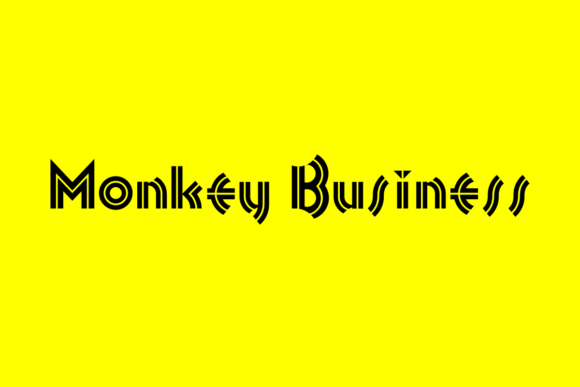
Monkey Business isn’t just playful—it’s purposefully bold, slightly quirky, and unmistakably modern. Think rounded terminals, confident curves, and a friendly rhythm that feels handmade without sacrificing polish. It’s got that “I mean business—but I also love a good pun” energy. As a display font, it shines brightest where you want attention: logos, packaging titles, social media banners, menu headers, and even the “Thank You” on your shipping stickers. It’s not meant for paragraphs or fine print—but oh, does it make a statement when used right.
I started simple: the front label of my best-selling “Forest Bath” candle. Instead of stacking two plain sans serif lines (“Forest Bath • Lavender + Cedar”), I set the name in Monkey Business at a generous size, then dropped the scent notes below in a clean, airy sans serif (I used Inter—it’s free, readable, and pairs beautifully). Instant upgrade. The label now feels intentional—not just functional. Customers notice it before they even smell it. Same thing happened when I updated my Instagram story templates: swapping in Monkey Business for “New Drop,” “Limited Stock,” or “Hand-Poured Weekly” gave my feed a consistent visual hook—like a signature move my audience began recognizing.
What makes Monkey Business especially valuable for small businesses is how easily it bridges personality and professionalism. You don’t need a designer to use it well. Whether you’re printing café menus on kraft paper, stamping boutique gift tags, or designing digital ads for your handmade soap line, this font adds warmth and distinction without looking gimmicky. It reads as approachable but not childish, creative but not chaotic. And because it’s part of the Freebies category, it’s accessible—no subscription, no hidden fees, no licensing guesswork (more on that in a sec).
Here’s where it works best:
- Logos & wordmarks — Especially for lifestyle, wellness, food, or craft brands that want charm with clarity.
- Packaging titles — On candle jars, bakery boxes, tea tins, or skincare bottles where space is tight but impact matters.
- Social media graphics — For quote cards, launch announcements, or seasonal promos that need to pop in a crowded feed.
- Printed collateral — Menus, event flyers, thank-you cards, or in-store signage where you want instant visual cohesion.
Readability? A quick tip: Monkey Business loves breathing room. On small labels or mobile thumbnails, keep it large enough to read at a glance—aim for at least 18–24pt on printed items, and test how it renders on your phone screen before finalizing. Avoid cramming too many words into one line; it’s happiest as a short, confident headline. If you’re using it on dark backgrounds, try a subtle white stroke or light shadow to ensure legibility—especially important for product mockups or Etsy listing images.
Font pairing is where things get fun—and practical. I’ve found Monkey Business plays especially well with:
- A clean sans serif font like Inter, Montserrat, or Lato for body text, captions, or ingredient lists.
- An elegant serif font like Playfair Display or Cormorant Garamond for contrast—great for luxury-leaning brands like natural skincare or artisanal chocolate.
- A relaxed handwritten font (used sparingly!) for accents like “hand-poured” or “small batch”—just one word, not a full sentence.
Before downloading any free font, I always double-check three things: file format (OTF or TTF works best for most design tools), included styles (Monkey Business comes with a single, strong weight—perfect for display use), and commercial licensing. Good news: it’s licensed for personal *and* commercial use—including on physical products, packaging, merchandise, and client work. No surprises. Just clear, ethical usage—exactly what small business owners need.
It’s easy to underestimate how much typography shapes trust. When your candle label, café menu, or online shop banner uses thoughtful, cohesive type, customers subconsciously register consistency—and consistency builds credibility. They think, “This person cares about the details.” That tiny shift in perception? It encourages repeat orders, shares, and word-of-mouth. I’ve had customers comment on my new labels unprompted—not just the scent, but how “happy” and “real” the text feels. That’s Monkey Business doing quiet, joyful work.
And yes—it’s a free font. But don’t mistake “free” for “less valuable.” In fact, having a standout display font like this in your toolkit means you can invest time and budget elsewhere—on better photography, stronger copy, or community-building—without sacrificing visual polish. It’s one of those rare Freebies that doesn’t ask you to compromise.
If you’re refreshing your brand identity—even just one piece at a time—start with where eyes land first. Try Monkey Business on your next label, menu header, or Instagram graphic. See how it changes the mood. Notice how it invites people in. Because great branding isn’t about being everywhere—it’s about being *memorable*, right where it counts.